
Is There a Difference Between Being Kind and Being Nice?
Being kind and being nice are often treated as though they mean the same thing. In everyday interactions, they frequently overlap. A good leader should generally be courteous, considerate, approachable, and respectful.
But kindness and niceness are not quite identical. Niceness is often concerned with making an interaction pleasant. Kindness goes deeper: it seeks the genuine good of another person, even when doing so requires an uncomfortable conversation, an unpopular decision, or an honest answer that may be difficult to hear.
This distinction is the starting point for our six-part series, “Kindness, Courage, and the Art of Leadership.” Over the coming weeks, we will explore how kindness relates to honesty, accountability, professional boundaries, difficult conversations, and the culture leaders create within their organizations.
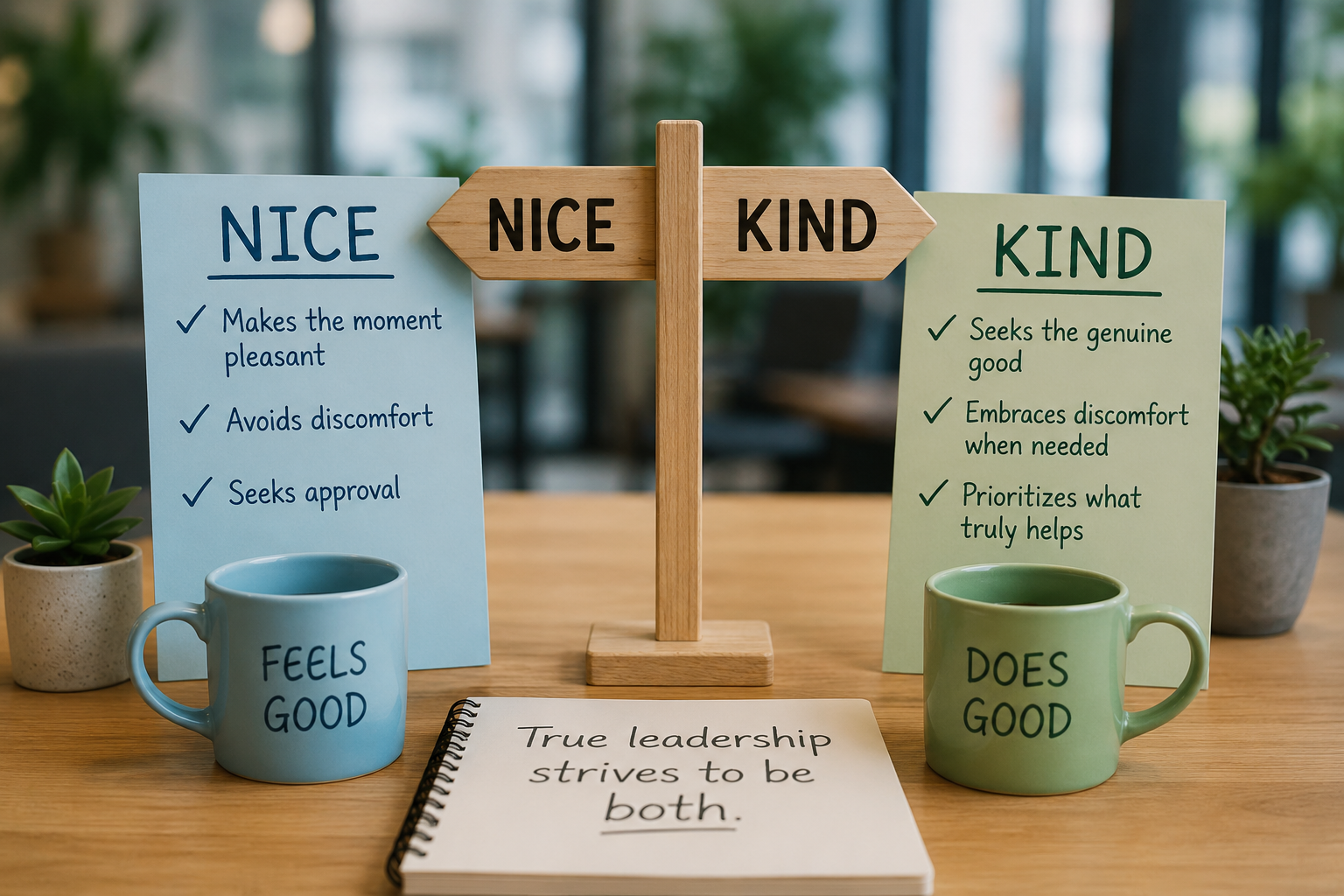
When Nice and Kind Work Together
There is nothing wrong with being nice. Courtesy and consideration are important parts of healthy professional relationships. Saying thank you, recognizing someone’s contribution, listening patiently, and treating colleagues respectfully all contribute to a positive workplace.
The distinction becomes important when maintaining a pleasant interaction conflicts with doing what may ultimately be best for another person or the organization.
A manager, for example, may recognize that an employee is struggling but hesitate to address the problem because the conversation could be uncomfortable. Avoiding the issue might feel nice in the moment. But if the employee never receives the feedback necessary to improve, was avoiding the conversation truly kind?
Kindness Sometimes Requires Courage
Leadership inevitably involves decisions that will not please everyone. Expectations must be established, problems addressed, and requests sometimes declined. In these situations, a desire to remain “nice” can become a form of avoidance.
Genuine kindness may require a leader to:
Give honest but constructive feedback.
Establish clear expectations.
Say “no” respectfully when necessary.
Address problems before they become more serious.
Hold people accountable while treating them with dignity.
None of these actions requires harshness. The manner in which a leader handles a difficult situation often reveals whether the motivation is genuinely constructive.
Kindness Is Not Weakness
Kind leadership is sometimes mistakenly associated with being permissive. But kindness does not require leaders to lower standards, overlook problems, or avoid conflict.
A leader can be compassionate and demanding. A supervisor can understand why someone made a mistake while still expecting it to be corrected. Respect for a person and accountability for that person’s actions can coexist.
This is where courage becomes an important companion to kindness. Leaders who genuinely care about others must sometimes be willing to accept temporary discomfort in pursuit of a better long-term outcome.
Leading with Both
The goal is not to choose between being nice and being kind. Strong leaders should strive to be both whenever possible.
Courtesy matters. Empathy matters. Making people feel respected and valued matters. But leadership also requires looking beyond the immediate comfort of an interaction. Sometimes kindness means encouragement or patience. Other times, it means having an honest conversation that neither person particularly wants to have.
A useful question for leaders is: Are we simply trying to keep the moment comfortable, or are we genuinely trying to help the person and the organization move forward?
In Part 2 of “Kindness, Courage, and the Art of Leadership,” we will explore “When Kindness Requires Honesty” and consider why constructive candor can be one of the most valuable things a leader offers.